 Pin it
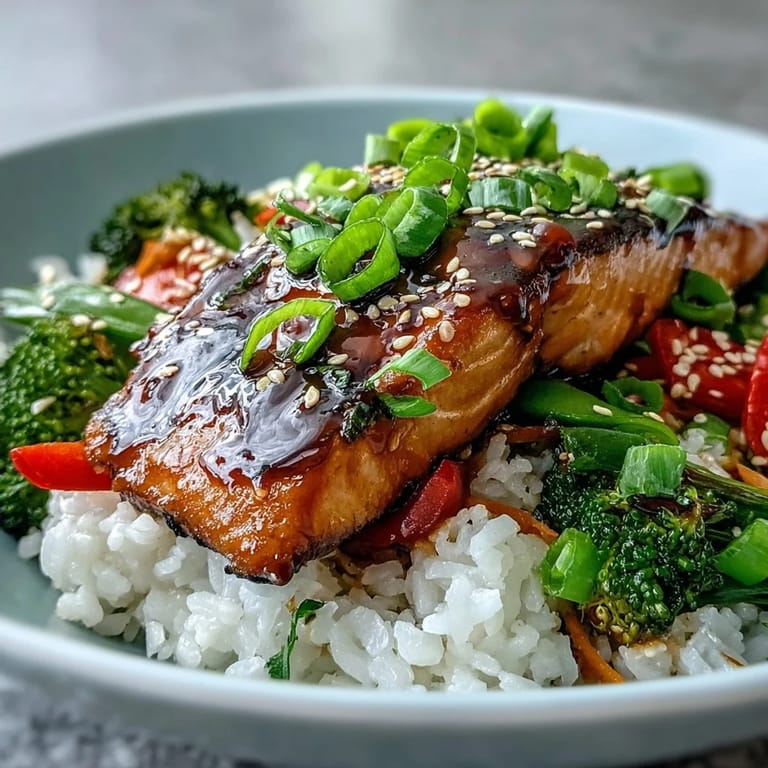
 My neighbor brought me fresh salmon one afternoon, and I had no plan for it except a vague memory of teriyaki glaze from a lunch spot I used to love. I rummaged through my pantry, pulled together soy sauce, mirin, and ginger, and hoped for the best. The kitchen filled with that unmistakable sweet-savory smell, and by the time I plated it over rice with stir-fried vegetables, I knew I'd stumbled onto something I'd make again and again. It's become my go-to when I want something that feels special but doesn't require much effort.
I made this for a small dinner party once, and my friend who swore she didn't like fish went back for seconds. She said the sauce was the trick, that it made the salmon taste rich without being overwhelming. I watched her scrape every last bit of glaze from her bowl, and I realized this recipe had a way of winning people over quietly. It's not flashy, but it delivers every time.
Ingredients
- Salmon fillets (4, about 150 g each): I prefer skin-on because it crisps beautifully in the pan, but skinless works just as well if you like a cleaner bite.
- Soy sauce (60 ml): The backbone of the teriyaki sauce, bringing deep umami and saltiness that anchors all the other flavors.
- Mirin (60 ml): This sweet rice wine adds a gentle sweetness and a bit of shine to the glaze, balancing the soy without making it cloying.
- Brown sugar (2 tbsp): I've used white sugar in a pinch, but brown sugar gives the sauce a deeper, almost molasses-like richness.
- Rice vinegar (1 tbsp): A splash of acidity cuts through the sweetness and keeps the glaze from feeling too heavy.
- Sesame oil (2 tsp): Just a little goes a long way, adding a nutty warmth that lingers in the background.
- Garlic (2 cloves, minced): Fresh garlic is key here, it blooms in the sauce and fills your kitchen with the best kind of smell.
- Fresh ginger (1 tsp, grated): I always grate mine on a microplane for a fine texture that melts into the sauce and adds a subtle zing.
- Cornstarch slurry (1 tsp cornstarch mixed with 2 tsp water): This thickens the sauce just enough to cling to the salmon without turning it into a sticky mess.
- Red bell pepper (1, sliced): Adds sweetness and a pop of color that makes the bowl look as good as it tastes.
- Carrot (1, julienned): I like thin strips because they cook quickly and add a slight crunch.
- Broccoli florets (150 g): They soak up a bit of the teriyaki sauce and stay just tender enough to bite through easily.
- Sugar snap peas (100 g): These stay crisp even after stir-frying, and their natural sweetness complements the glaze perfectly.
- Jasmine or sushi rice (300 g): Fluffy, slightly sticky rice is the ideal base to soak up all that extra sauce.
- Sesame seeds and spring onions (optional): A quick sprinkle at the end adds texture and a fresh, bright finish.
Tired of Takeout? 🥡
Get 10 meals you can make faster than delivery arrives. Seriously.
One email. No spam. Unsubscribe anytime.
Instructions
- Cook the Rice:
- Rinse the rice under cold water until it runs clear, then combine it with water in a saucepan and bring to a boil. Reduce the heat, cover, and let it simmer for 15 minutes, then remove from heat and let it rest covered for 5 minutes so it finishes steaming perfectly.
- Make the Teriyaki Sauce:
- In a small saucepan, combine soy sauce, mirin, brown sugar, rice vinegar, sesame oil, garlic, and ginger, then bring it to a simmer over medium heat, stirring until the sugar dissolves. Stir in the cornstarch slurry and cook for 1 to 2 minutes until the sauce thickens and coats the back of a spoon.
- Sear the Salmon:
- Season the salmon fillets with salt and pepper, then heat a splash of oil in a large nonstick skillet over medium-high heat and sear the fillets skin-side down for 3 to 4 minutes. Flip them and cook for another 2 to 3 minutes until just cooked through and the flesh flakes easily.
- Glaze the Salmon:
- Brush the salmon generously with the teriyaki sauce and cook for 1 more minute, letting the glaze caramelize slightly. Remove from heat and set aside.
- Stir-Fry the Vegetables:
- Heat vegetable oil in a wok or large skillet over high heat, then toss in the bell pepper, carrot, broccoli, and sugar snap peas and stir-fry for 3 to 4 minutes until just tender but still crisp. The vegetables should be bright and vibrant, not soft.
- Assemble the Bowls:
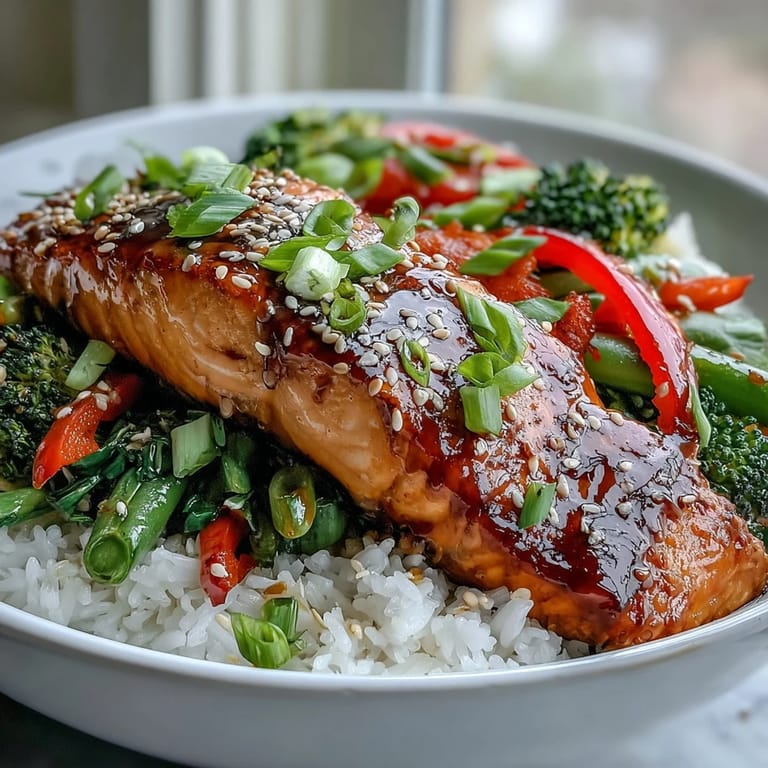
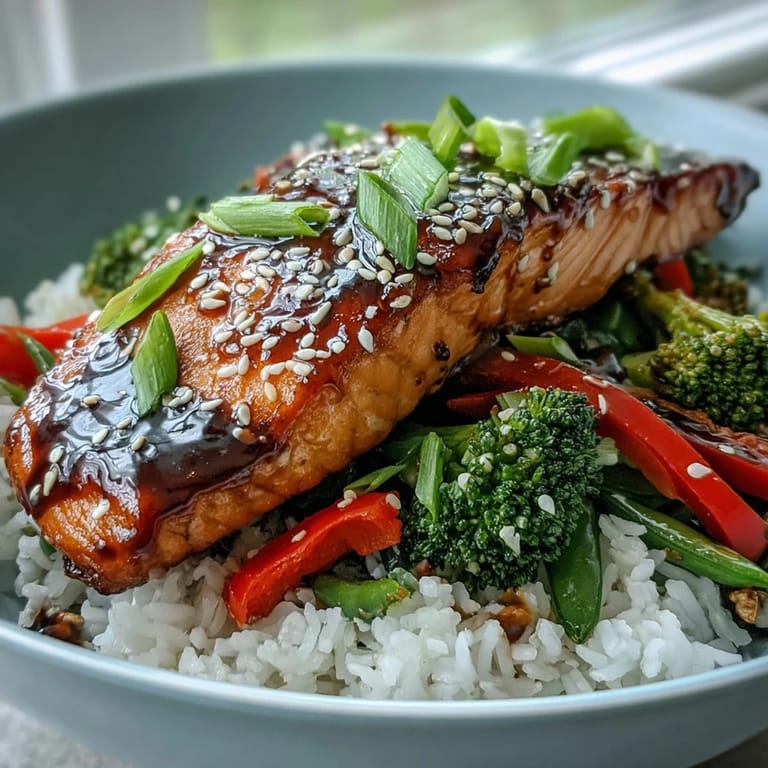
- Divide the cooked rice between bowls, then top with the stir-fried vegetables and a glazed salmon fillet. Drizzle any extra teriyaki sauce over the top and finish with sesame seeds and spring onions if you like.
 Pin it
 One evening, I made this for myself after a long day and ate it straight from the pan, sitting on the kitchen counter. The salmon was warm and glossy, the vegetables still had that satisfying snap, and the rice soaked up every drop of sauce. It wasn't fancy, but it felt like exactly what I needed, and I remember thinking that sometimes the best meals are the ones you make just for yourself.
Swapping Vegetables
I've thrown in zucchini, mushrooms, baby corn, and even shredded cabbage depending on what's in the fridge. The key is cutting everything into similar-sized pieces so they cook evenly in the same amount of time. Don't be precious about the vegetable list, this recipe is forgiving and actually benefits from a little spontaneity.
Marinating the Salmon
If you have an extra 15 minutes, marinate the salmon in half the teriyaki sauce before cooking. It won't make or break the dish, but it does add an extra layer of flavor that seeps into the fish. Just be sure to pat the fillets dry before searing so you get a nice crisp on the outside.
Serving and Storing
This dish is best enjoyed fresh, but leftovers reheat surprisingly well in a covered skillet over low heat with a splash of water to keep everything moist. I like to pack the components separately if I'm making lunch for the next day, the rice, vegetables, and salmon all hold up better when stored apart. You can also double the teriyaki sauce and keep it in the fridge for up to a week, it's great on chicken, tofu, or even drizzled over roasted vegetables.
- Store leftover salmon and vegetables in airtight containers in the fridge for up to 2 days.
- Reheat gently to avoid drying out the fish.
- Extra teriyaki sauce keeps well and can be used as a quick stir-fry glaze or dipping sauce.
 Pin it
 This teriyaki salmon bowl has become one of those recipes I turn to when I want comfort and color on the same plate. It's simple, satisfying, and somehow always tastes better than I remember.
Common Questions
- → Can I use frozen salmon fillets?
Yes, frozen salmon works well for this bowl. Thaw completely in the refrigerator overnight before cooking, then pat dry with paper towels to remove excess moisture before seasoning and searing.
- → What vegetables work best in this bowl?
Bell peppers, carrots, broccoli, and sugar snap peas provide great color and texture contrast. You can also use zucchini, mushrooms, baby corn, snow peas, or bok choy depending on what's in season.
- → Can I make the teriyaki sauce ahead?
Absolutely. Prepare the sauce up to 3 days in advance and store in an airtight container in the refrigerator. Reheat gently before using, adding a splash of water if it has thickened too much.
- → Is there a substitute for mirin?
If you don't have mirin, you can use equal parts dry sherry or white wine mixed with a pinch of sugar. The flavor won't be identical, but it will still provide sweetness and depth.
- → How do I know when the salmon is done?
The salmon is cooked when it flakes easily with a fork and the internal temperature reaches 145°F (63°C). The flesh should turn opaque and slightly pink throughout. Be careful not to overcook, as salmon can dry out quickly.
- → Can I make this bowl gluten-free?
Yes, use tamari or gluten-free soy sauce instead of regular soy sauce. Double-check that all other ingredients, including the mirin and sesame oil, are certified gluten-free.