 Pin it
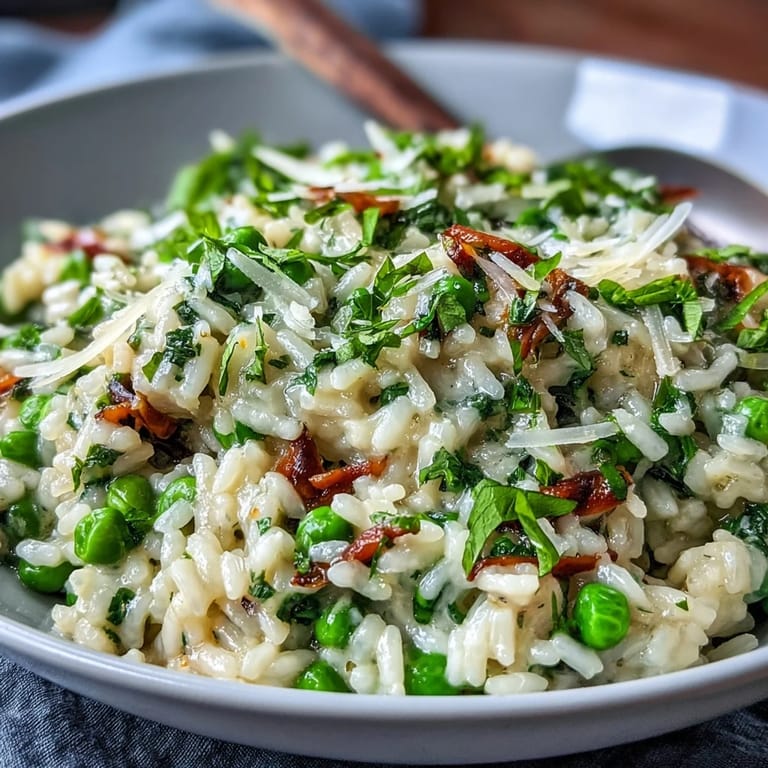
 The first time I made this spring pea risotto, it was purely out of curiosity—the pile of fresh peas at the market was just too charming to resist. The kitchen filled with a grassy, sweet scent as I shelled those peas, my fingers turning just a little green. I hadn’t planned on making a full meal, but the urge for something gentle and creamy won out. As the risotto bubbled away, I realized how closely smell and color can make you feel like you’re cooking up a new season itself.
The last time I brought this to the table, my friend poked her head into the kitchen, drawn by the gentle sizzle and nutty smell of the rice toasting. She swiped a spoonful right from the pot and declared it “absolutely unfair” to keep the flavors to myself. That moment reminded me that sharing food can feel more memorable than finishing any perfect recipe. Watching someone tuck in, eyes wide, always makes the effort worth it.
Ingredients
- Fresh or frozen spring peas: Sweet green peas are the heart of this risotto—I’ve found that frozen peas work beautifully if fresh aren’t in season, just add them straight from the freezer.
- Shallot: Use shallots for their gentle, almost floral flavor—they melt perfectly into the background, but if you only have onions, use half the amount.
- Garlic: Finely minced garlic gives the risotto a subtle warmth without overwhelming the fresh ingredients.
- Fresh mint leaves: Chop the mint right before using—it turns black if it sits around, but its zing is totally worth the prep.
- Lemon zest: Grate the zest over the pan just before serving for a fragrant finish; it’s an easy trick for brightening up the dish.
- Arborio rice: Arborio’s starchy grains are what create that signature creamy texture—don’t rinse them or you’ll lose the magic.
- Low-sodium vegetable broth: Warm, flavorful broth is key for slowly coaxing out the risotto’s texture without overpowering the peas.
- Dry white wine: A splash of white wine gives lovely depth—choose something crisp and maybe pour yourself a glass alongside.
- Olive oil: This is for softening the shallots and toasting the rice; a good olive oil makes the flavor gentler.
- Unsalted butter: Butter stirred in at the end makes everything lush and glossy; don’t skip it.
- Aged Parmesan cheese: Finely grated Parmesan melts into the risotto, adding a nutty, salty complexity—buy a wedge and grate it fresh if you can.
- Kosher salt: Start small and taste as you go; the cheese adds plenty of salt too.
- Freshly ground black pepper: Just a touch wakes up all the flavors—add more at the end if you like a bit of a kick.
Tired of Takeout? 🥡
Get 10 meals you can make faster than delivery arrives. Seriously.
One email. No spam. Unsubscribe anytime.
Instructions
- Warm the broth:
- Gently heat the vegetable broth in a saucepan so it stays hot but never boils, making it easy for the rice to absorb.
- Sauté the aromatics:
- In your biggest, heaviest skillet, let olive oil shimmer before adding shallot and garlic; breathe in and sauté until they soften and almost disappear, about 2 minutes.
- Toast the rice:
- Pour in the Arborio rice and stir so each grain glistens with oil; listen—a faint crackle means they’re toasting just right.
- Add the wine:
- Raise the heat, simmer off the wine as you stir until the rice absorbs its tang; the kitchen will smell bright and inviting.
- Build the creaminess:
- Add broth a ladleful at a time, working patiently and stirring between each splash, watching the rice grow plump and almost silky.
- Stir in the peas:
- Once the rice begins to soften (after about 15 minutes), fold in the peas; savor the sight of green against creamy white as the peas cook but stay fresh.
- Finish with flavor:
- Take the pan off the heat and vigorously stir in butter, Parmesan, mint, and lemon zest; the risotto will become rich, glossy, and fragrant.
- Season and serve:
- Taste and adjust salt and pepper, then spoon the risotto into warm bowls—scatter with extra cheese and mint for good measure.
 Pin it
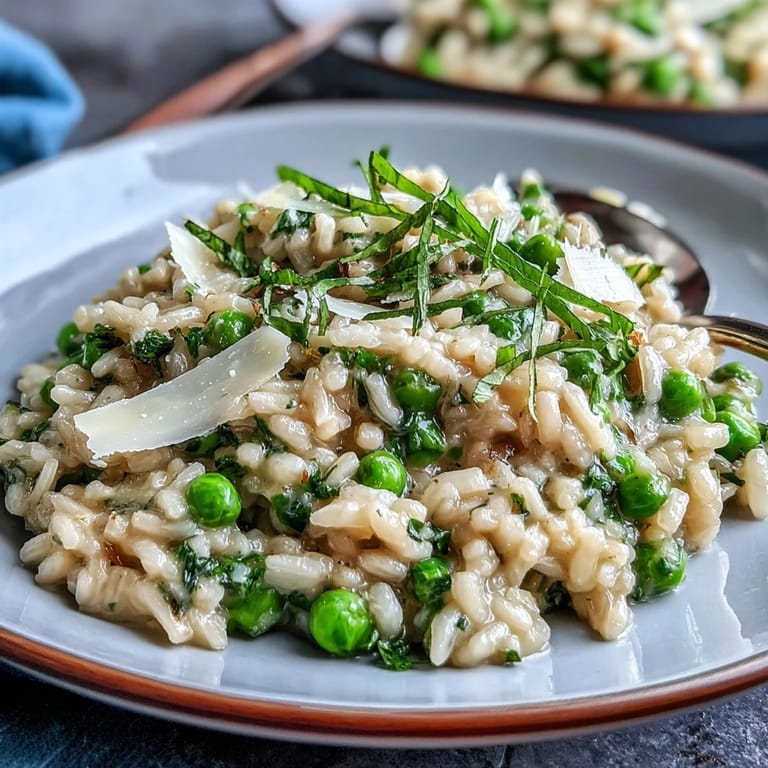
 The risotto is always at its best when people gather at the table before you even call, bowls ready and laughter echoing around. It’s the mix of anticipation, steam rising, and that first creamy bite that makes this more than just a recipe—it feels like spring arriving inside your home.
How to Make It Your Own
Once, out of curiosity, I tossed in a handful of baby spinach during the last few minutes—it melted into the risotto adding another shade of green and a bit more heartiness. You could even add blanched asparagus tips or swap mint for basil if that’s what’s on hand. The beauty of risotto is how willing it is to adapt and take on a little of your mood or pantry quirks.
Pairing Ideas For a Spring Table
If you’re feeling fancy, serve this risotto with a chilled glass of Sauvignon Blanc or Pinot Grigio—the citrusy, mineral notes echo the freshness of the peas and lemon. I once paired it with a side of simply dressed arugula, and the peppery greens played perfectly alongside the creamy rice. For something heartier, a poached egg on top makes the whole affair feel indulgent and brunch-worthy.
Troubleshooting & Last Touches
Risotto can feel intimidating, but really it’s just about a little patience and tuning in to the sound and look of your pan. If the rice is still chalky after all the broth is gone, add a splash of hot water—there’s no harm in taking your time. And if it feels too thick before serving, stir in a spoonful of warm broth just to loosen it again.
- Keep the cheese ready to add off the heat so it melts, not clumps.
- If your lemon seems tough to zest, microwave it for a few seconds first.
- Don’t forget to taste and season before serving—the risotto should taste bright and balanced.
 Pin it
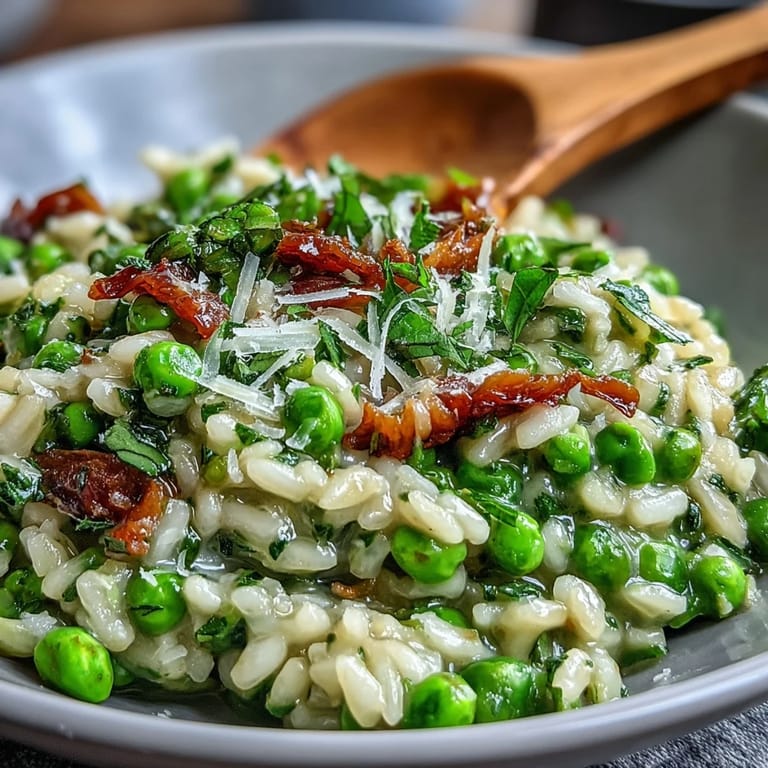
 This risotto is a delicious excuse to welcome spring into your kitchen—every spoonful is a little reminder to enjoy the season’s gentle pleasures.
Common Questions
- → Can I use frozen peas instead of fresh?
Yes — frozen peas work very well. Add them straight to the risotto about 15 minutes into cooking so they thaw through and keep a bright color without turning mushy.
- → How do I get a creamy, non-sticky texture?
Use Arborio rice, keep the broth warm, add it slowly while stirring frequently to release starch, and stop as soon as the grains are al dente. Finish with butter and aged Parmesan for silkiness.
- → What can I substitute for the white wine?
Replace the wine with an equal amount of warm vegetable broth plus a splash of lemon juice or a teaspoon of white wine vinegar to maintain acidity and brightness.
- → How can I make this dairy-free or vegan?
Swap butter for olive oil or vegan butter and replace Parmesan with nutritional yeast or a vegan hard-cheese alternative; adjust salt to taste to compensate for lost saltiness from cheese.
- → How should I reheat leftovers without losing texture?
Gently reheat over low heat with a little warm broth or water, stirring to loosen the rice. Avoid microwaving at full power, which can dry out the dish.
- → What wine pairs best with this dish?
A crisp Sauvignon Blanc or Pinot Grigio complements the lemony, herby brightness and the creaminess of the dish; choose something with good acidity to cut the richness.