 Pin it
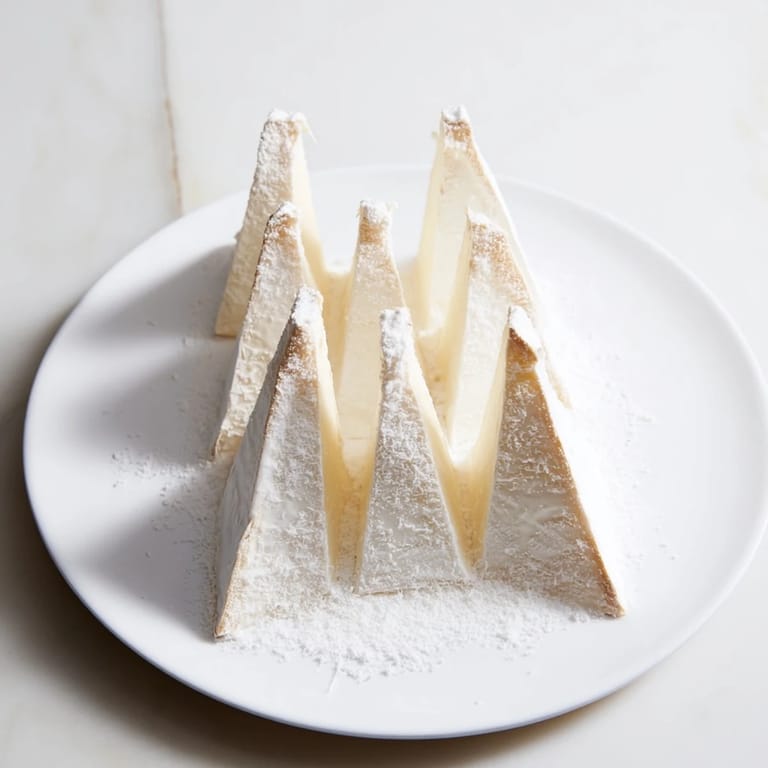
 I discovered this dish at a small bistro in the French Alps, where the chef arranged wedges of creamy Brie on a dark slate plate, each one dusted white like actual snowcaps. What struck me wasn't the elegance of it all, but how she laughed when I asked if it was meant to be purely decorative—she said the best appetizers are the ones that make people smile before they even taste them. That moment stuck with me, and I've been making versions ever since, watching guests' faces light up the instant they realize soft, buttery cheese just became art on their plate.
I remember bringing this to a winter dinner party where someone had forgotten to prepare anything, and the host was starting to panic. I unwrapped my Brie, pulled out my grater, and within fifteen minutes we had this stunning centerpiece that made the whole evening feel intentional and festive. Everyone crowded around it like we'd done something revolutionary—all because two simple cheeses arranged with a little creativity turned an ordinary appetizer into a conversation piece.
Ingredients
- Brie cheese (400 g): Buy it well chilled or stick it in the freezer for 30 minutes before cutting; cold cheese cuts cleanly without smearing, and room temperature Brie melts beautifully on your tongue.
- Parmesan cheese (40 g), finely grated: The snowy topping that makes this dish, so grate it just before serving or it'll clump together from moisture.
- Fresh thyme sprigs (optional): A whisper of green among the whites and creams, it's there if you want that extra forest-floor moment.
Tired of Takeout? 🥡
Get 10 meals you can make faster than delivery arrives. Seriously.
One email. No spam. Unsubscribe anytime.
Instructions
- Chill and slice:
- Pull your Brie from the cold and, with a sharp knife dipped in warm water (then wiped clean), cut it into sixteen triangular wedges. The warmth helps, but the cold cheese does the real work; you'll hear a satisfying quiet snap as the blade passes through.
- Build your range:
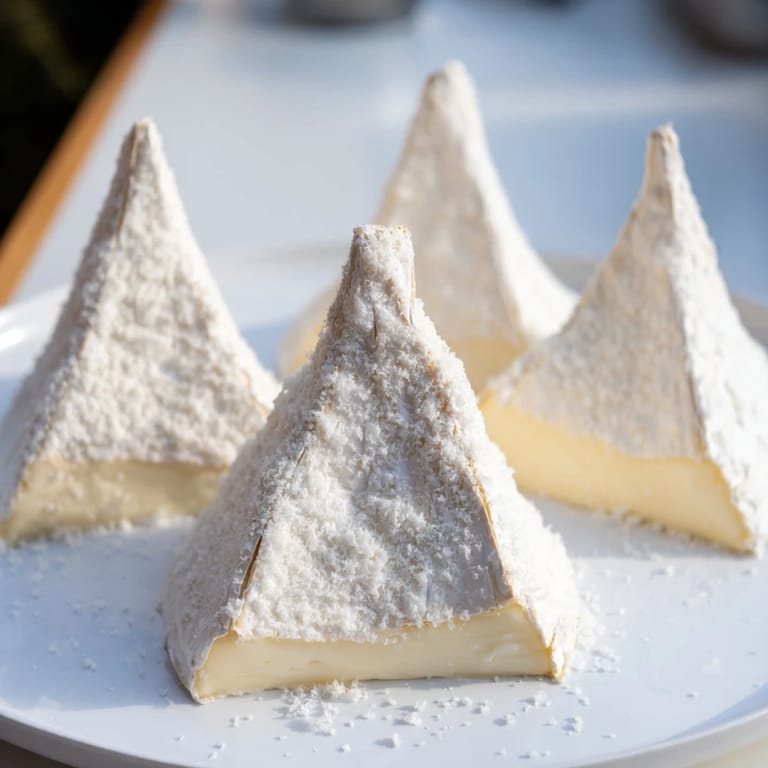
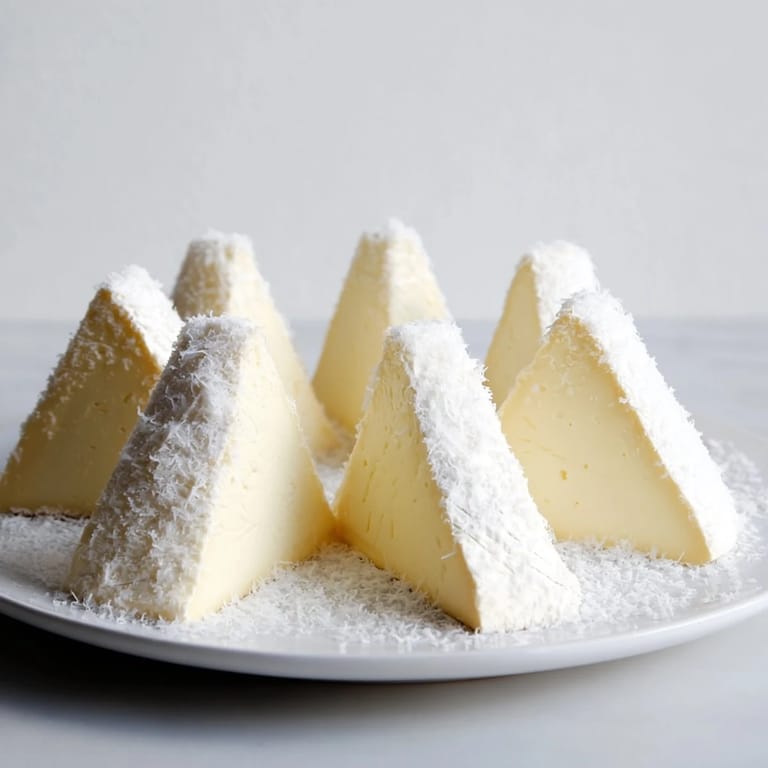
- Stand each wedge upright on your serving platter, points reaching upward like peaks catching first light. Step back and tilt your head—does it feel mountain-like to you? If not, angle them a bit more.
- Add the snow:
- Dust Parmesan generously across the tops and sides of each wedge, letting some scatter onto the platter for effect. Your fingertips will be dusted white; that's the sign you've done it right.
- Garnish and serve:
- If using thyme, tuck sprigs between the wedges as if they're evergreens clinging to the mountainside. Serve immediately alongside crackers or baguette slices, and watch the first guest's face when they realize this is actually edible.
 Pin it
 There was a moment at a New Year's Eve party when someone bit into one of these and closed their eyes, just for a second, tasting the butter and the salt and the slight nuttiness all at once. They looked at me and said nothing needed to be fancier than this. That's when I understood—sometimes the most memorable dishes aren't the complicated ones, they're the ones that let good ingredients speak for themselves.
The Art of Simplicity
This recipe taught me that elegance and ease aren't mutually exclusive. There's no sauce to balance, no timing to stress over, just your knife skills and a sense of play. The Parmesan snow is the magic trick—it transforms two humble cheeses into something that feels intentional and special, yet requires nothing more than an afternoon light and a steady hand.
Pairing and Presentation
I've found this works best with wines that have a crisp edge and some mineral quality. A chilled Chardonnay or Sauvignon Blanc mirrors the coolness of the cheese, while a sparkling wine adds a celebratory lift. Presentation matters here too—a dark platter, a wooden board, even a piece of parchment paper transforms the simple arrangement into something that photographs beautifully and feels intentional the moment it lands on the table.
Variations and Swaps
I've experimented with substitutes over the years, and each shifts the mood slightly. Camembert feels a touch earthier, while triple-cream cheese becomes almost custard-like in richness. Sometimes I dust with truffle salt instead of straight Parmesan, or I'll add a whisper of fresh rosemary under the snow. The structure stays the same, but these small swaps let you respond to what's in your kitchen and what mood you're chasing.
- Try a light drizzle of honey or truffle oil across the platter just before serving for unexpected depth.
- Sub in finely grated Gruyère or Pecorino if you want a sharper, more assertive bite.
- Toast whole thyme sprigs lightly in butter and scatter them for a warmer, more complex garnish.
 Pin it
 This dish reminds me why I love cooking: sometimes the smallest effort, paired with good ingredients and a bit of intention, becomes the thing people remember. Serve it with a smile, and watch it disappear.
Common Questions
- → What is the best way to cut Brie for this presentation?
Use a sharp knife to slice the chilled Brie into 16 clean, triangular wedges about 25g each, ensuring upright stability.
- → Why dust Parmesan over the Brie wedges?
Grated Parmesan resembles fresh snow atop mountains, adding a savory depth and visual contrast.
- → Can I use other cheeses besides Brie?
Yes, Camembert or triple-cream cheeses can be substituted for richer flavor profiles while maintaining the design.
- → Is there a way to enhance the Parmesan flavor?
Gently toasting Parmesan in a dry pan before dusting imparts a nuttier, more complex taste.
- → What garnishes complement this dish well?
Fresh thyme sprigs add visual appeal and a subtle herbal note that balances the creamy cheese.