 Pin it
 There's something about chopping vegetables on a quiet Sunday morning that shifts your entire week. I wasn't trying to be virtuous when I first made this rainbow soup, but somehow the act of watching those jewel-toned beets stain my fingers deep pink, the bright orange carrots catching the kitchen light, felt like I was doing something genuinely good for myself. That first sip, warm and impossibly vibrant, tasted less like deprivation and more like permission to nourish instead of punish.
My neighbor stopped by while I was ladling this into bowls and asked what smelled so good. We ended up sharing a pot on her kitchen counter, and she mentioned it was the first time in months she'd felt genuinely full without feeling stuffed. That quiet admission stuck with me more than any compliment could have.
Ingredients
- Beetroot: The foundation of this soup's deep color and earthy sweetness, it bleeds into everything beautifully and brings natural minerality that makes you feel the nourishment.
- Carrots: They add a subtle sweetness that balances the earthier vegetables, and slicing them at different thicknesses helps them cook at the right pace alongside the harder vegetables.
- Courgette: This keeps the soup light and fresh, adding bulk without heaviness, so it feels generous without being overwhelming.
- Tomatoes: Fresh ones bring brightness and acidity that prevents the soup from feeling muddy or one-note, though canned work beautifully too if fresh aren't available.
- Green bell pepper: It adds vegetal freshness and slight sweetness that rounds out the deeper root vegetable notes.
- Red onion: More delicate than yellow onions, it adds a gentle sharpness that dissolves into the broth rather than dominating it.
- Garlic: Just enough to whisper in the background, not to shout, creating a warm base note for all the vegetables.
- Baby spinach: Optional but worthwhile, it wilts in at the end and adds a subtle mineral quality without changing the soup's character.
- Vegetable broth: Use good quality here because it's the backbone, and a watery broth will leave you with watery soup.
- Olive oil: A tablespoon is all you need, keeping the fat content low while building that crucial flavor foundation.
- Lemon juice: This is the secret finishing note that makes everything taste like itself, brightening without making it sour.
- Cumin, turmeric, and smoked paprika: These warm spices tie the vegetables together and give you that gentle detox feeling without tasting medicinal.
- Fresh parsley or coriander: The garnish that transforms it from simple to special, adding a green note right at the end.
Tired of Takeout? 🥡
Get 10 meals you can make faster than delivery arrives. Seriously.
One email. No spam. Unsubscribe anytime.
Instructions
- Start with heat and aromatics:
- Warm your olive oil over medium heat until it shimmers slightly, then add the onion and garlic. You'll know it's right when the garlic becomes fragrant and the onion turns translucent at the edges, about 2-3 minutes. This is your foundation, so don't rush it.
- Build layers with the hardest vegetables:
- Add the beetroot, carrots, and green pepper now, letting them toast in the oil for 4-5 minutes while you stir occasionally. You're not cooking them through yet, just awakening their flavors and letting them soften slightly at the edges.
- Add the middle vegetables and spices:
- Toss in the courgette and tomatoes, then sprinkle over your cumin, turmeric, paprika, salt, and pepper. Stir everything together and cook for another 2 minutes so the spices coat the vegetables and bloom in the heat.
- Bring it all together with broth:
- Pour in your vegetable broth and bring everything to a boil, then immediately turn the heat down to a gentle simmer. You're looking for small bubbles breaking the surface, not a rolling boil that will make everything fall apart.
- Let it simmer and soften:
- Leave it uncovered for 20-25 minutes, until the vegetables are completely tender when you pierce them with a fork. The beetroot will be the last thing to fully soften, so check that first.
- Finish with greens and brightness:
- Stir in the spinach if you're using it, let it wilt for a minute, then remove from heat and add your lemon juice. Taste and adjust the salt and spices because this is your moment to make it exactly right.
- Serve with intention:
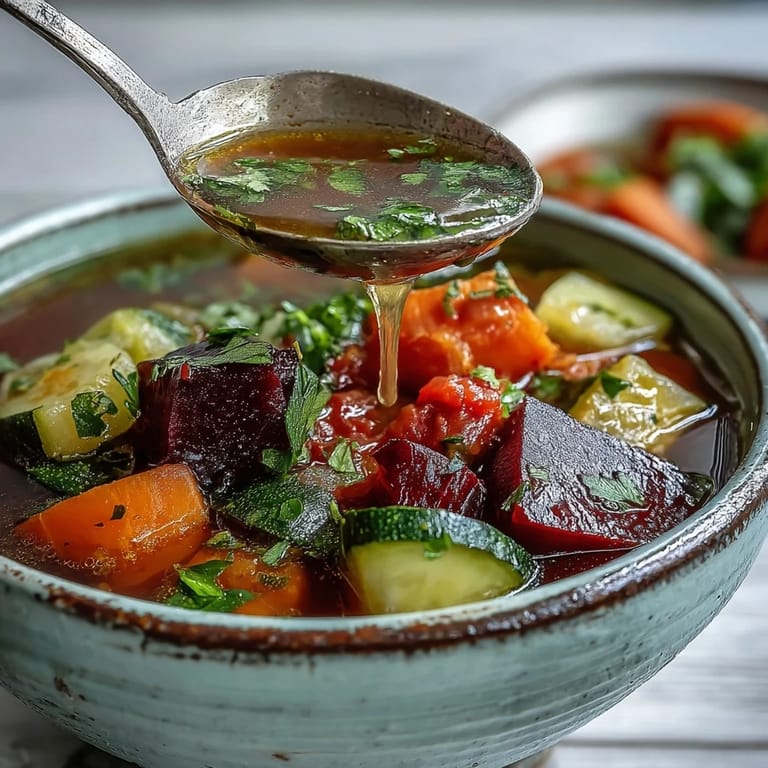
- Ladle into bowls and scatter the fresh parsley or coriander over the top, where it will catch the light and remind you that this is food that deserves to be savored.
 Pin it
 I started making this soup when I realized I was eating in a way that made me feel disconnected from what I was putting in my body. This became the thing I turned to not because it was restrictive or punishing, but because it felt like an act of self-listening in liquid form.
The Truth About Color and Nutrition
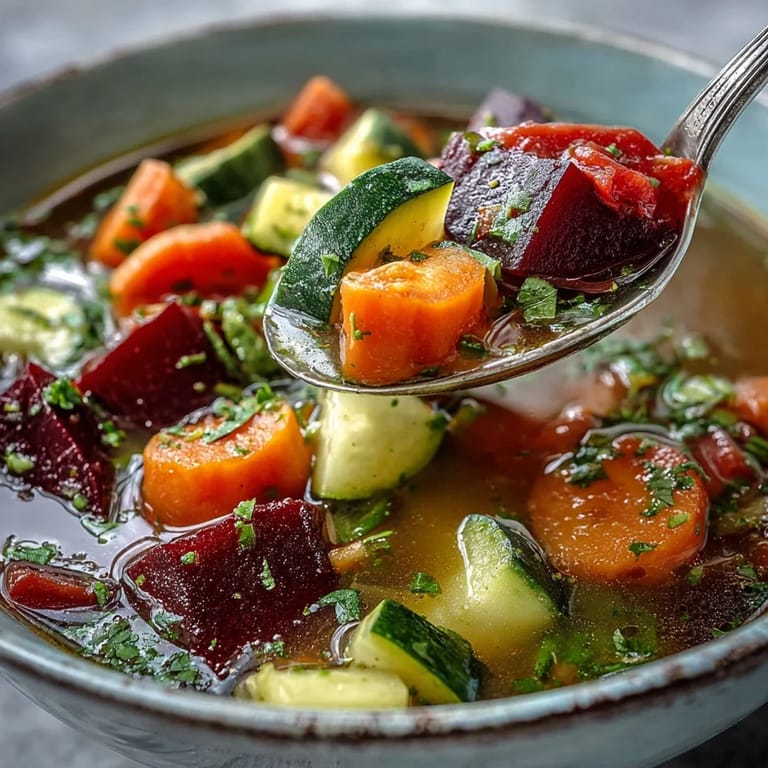
Every color in this soup does something different for you. The deep purple of the beetroot comes from betalains, the orange of the carrots from carotenoids, the greens from chlorophyll, and together they create a synergy that single-ingredient supplements can never match. When you see that spectrum in your bowl, you're not just eating soup, you're eating the visible proof of nutritional diversity. It sounds fancier than it is, but I promise you'll taste the difference between a dull brown soup and this vivid, alive-looking one.
Making It Your Own
This recipe is a template, not a rule. I've made it with sweet potato when carrots felt boring, added chickpeas when I needed the protein to stick with me through the afternoon, switched the herbs based on what was growing in my kitchen window. The magic isn't in following instructions precisely, it's in understanding that these proportions create a balanced soup that can handle your experiments. The structure stays the same, the flavors shift based on what your body actually wants.
Storing and Reheating
This soup keeps beautifully in the refrigerator for up to four days, and honestly gets better as it sits because the flavors settle and deepen into something more complex than day one. When you reheat it, do it gently over medium heat rather than blasting it on high, which will keep the vegetables from turning to mush and the broth from tasting flat. A quick squeeze of fresh lemon juice before serving brings everything back to life.
- Freeze it in portions for the moments when you forget to take care of yourself.
- Add the spinach and lemon juice fresh each time you reheat for the brightest result.
- A warm bowl of this soup is one of the kindest things you can do for yourself on a difficult day.
 Pin it
 This soup taught me that nourishment doesn't have to be complicated or restrictive to feel real. It's simply vegetables and time, patience and attention, transformed into something that makes you feel like you're taking care of yourself.
Common Questions
- → How long does this soup keep in the refrigerator?
The soup stores well for 4-5 days in an airtight container. The flavors actually develop and improve after a day or two. Reheat gently on the stovetop, adding a splash of broth if needed.
- → Can I freeze this vegetable soup?
Yes, this freezes beautifully for up to 3 months. Cool completely before transferring to freezer-safe containers. Thaw overnight in the refrigerator and reheat slowly. The texture remains excellent after freezing.
- → What vegetables work best as substitutes?
Sweet potatoes replace carrots beautifully, while butternut squash works instead of courgette. Feel free to add seasonal vegetables like leeks, celery, or kale. The broth and spices adapt well to various vegetable combinations.
- → How can I make this more filling?
Add a drained can of chickpeas or white beans when pouring in the broth. Alternatively, serve with crusty whole-grain bread, quinoa on the side, or blend部分 of the soup for a creamier texture that feels more substantial.
- → What's the purpose of the lemon juice?
Fresh lemon juice brightens all the flavors and cuts through the earthiness of beetroot. It also helps your body absorb more iron from the vegetables. Add it at the end to preserve its vibrant acidity.
- → Can I make this in a slow cooker?
Sauté the onion and garlic first, then add everything except spinach and lemon juice to your slow cooker. Cook on low for 4-6 hours or high for 2-3 hours. Stir in spinach during the last 10 minutes and add lemon just before serving.