 Pin it
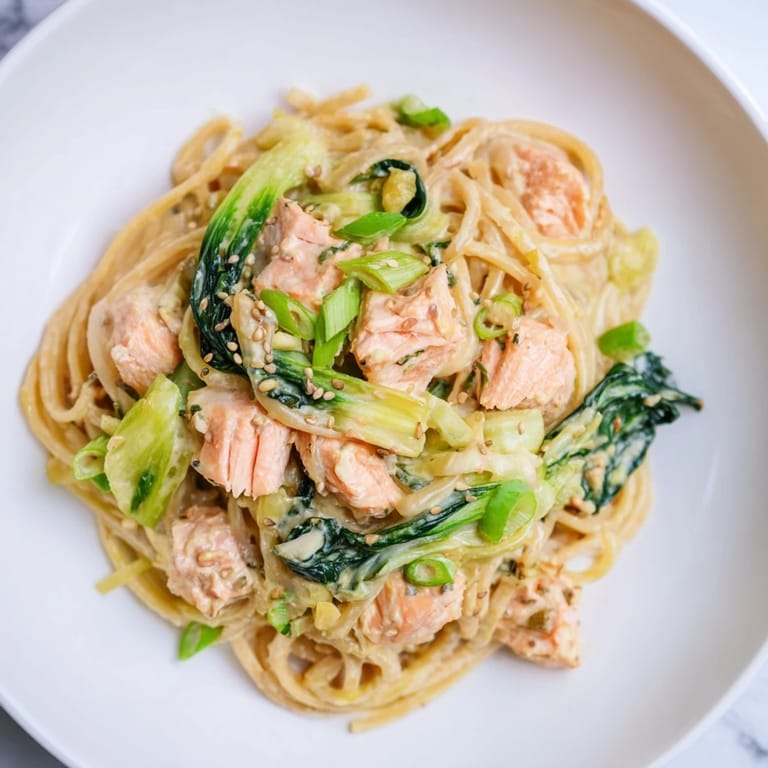
 The first time I made miso butter salmon pasta, my kitchen filled with this incredible aroma that made my roommate abandon her study session to investigate. We ended up eating straight from the pan, standing over the stove, completely abandoning any pretense of a proper dinner. That night taught me that some dishes are meant to be shared immediately, not saved for later presentation.
I once made this for a friend who claimed she did not like fish-based pasta dishes. She took one tentative bite, her eyes widened, and she proceeded to have two servings. The miso transforms the salmon into something almost savory and nutty, not fishy at all. Now she requests it whenever she comes over, and I always keep salmon in the freezer just in case.
Ingredients
- Salmon: Cut into bite sized pieces so they cook quickly and stay moist, plus smaller pieces mean more surface area for that miso butter sauce to cling to
- Linguine or spaghetti: Long strands hold the creamy sauce beautifully, and the texture contrasts perfectly with the tender salmon
- White miso paste: The secret ingredient that adds deep, savory umami without overpowering the delicate salmon flavor
- Baby bok choy: Mild and slightly sweet when wilted, adding fresh crunch that balances all that rich creaminess
- Heavy cream: Creates that luscious, restaurant quality sauce that coats every single strand of pasta
- Garlic and scallions: Aromatic layers that build depth without competing with the miso and salmon
- Butter: The foundation of the sauce, adding richness and helping the miso dissolve into something smooth and velvety
- Soy sauce and mirin: Balance the cream with salt and subtle sweetness, making the sauce complex instead of just heavy
- Sesame oil: Just a teaspoon adds nutty aroma that rounds out the entire dish
- Black pepper: Adds gentle heat that cuts through the richness without overpowering delicate flavors
Tired of Takeout? 🥡
Get 10 meals you can make faster than delivery arrives. Seriously.
One email. No spam. Unsubscribe anytime.
Instructions
- Cook the pasta:
- Boil salted water and cook pasta until al dente, reserving half a cup of that starchy pasta water before draining. This liquid gold will help emulsify the sauce later if it needs loosening.
- Sauté the aromatics:
- Heat one tablespoon of butter and sesame oil in a large skillet, then cook minced garlic until fragrant, about one minute. The sesame oil adds nutty depth while butter provides richness.
- Cook the salmon:
- Add salmon pieces to the skillet and cook gently for two to three minutes per side until just cooked through. Remove and set aside. The salmon will finish cooking in the sauce later, so do not overcook it now.
- Build the miso butter sauce:
- Add remaining butter to the same skillet, whisk in miso paste, soy sauce, and mirin until smooth. The mixture will look glossy and smell incredible.
- Add cream and vegetables:
- Pour in heavy cream and black pepper, stir to combine, then add chopped bok choy. Cook for two to three minutes until bok choy just wilts but still retains some crunch.
- Combine everything:
- Return salmon to the skillet, add drained pasta, and toss everything together. Use reserved pasta water as needed to achieve a silky, coating consistency.
 Pin it
 This dish became my go-to for dinner parties because it feels impressive but comes together in under 40 minutes. I love watching people take that first bite and pause, trying to place what makes the sauce so extraordinary. The miso is always the surprise ingredient no one expects but everyone instantly understands.
Choosing The Right Salmon
Fresh salmon works beautifully, but frozen thawed perfectly in the refrigerator overnight performs just as well. Avoid salmon that smells overly fishy or has brown spots. Center cut portions yield the most uniform pieces, which means even cooking and better presentation. Pat the salmon completely dry before cutting into pieces. Excess moisture creates steam instead of that golden sear we want.
Miso Paste Essentials
White miso paste, or shiro miso, ferments for a shorter time than red miso, resulting in a milder, sweeter flavor that complements cream based sauces. Once opened, store miso in the refrigerator in an airtight container where it keeps for months. The paste develops a stronger flavor over time, so taste before adding. Always whisk miso into warm fat or liquid first. It dissolves much more smoothly than when added directly to cold ingredients.
Pasta Water Magic
That reserved half cup of starchy pasta water works as an emulsifier, helping the miso butter sauce cling to every strand instead of sliding off. Add it a tablespoon at a time if the sauce looks too thick or separated. The starch also helps stabilize the cream, preventing the sauce from breaking. This restaurant technique transforms good pasta into great pasta with zero extra effort. Never pour it all in at once, and always add while the heat is on so it incorporates properly.
- Toss the pasta vigorously in the sauce for at least 30 seconds to help the starches mingle
- If reheating leftovers, add a splash of water to revive the silky texture
- Stop adding pasta water the moment the sauce coats each strand evenly
 Pin it
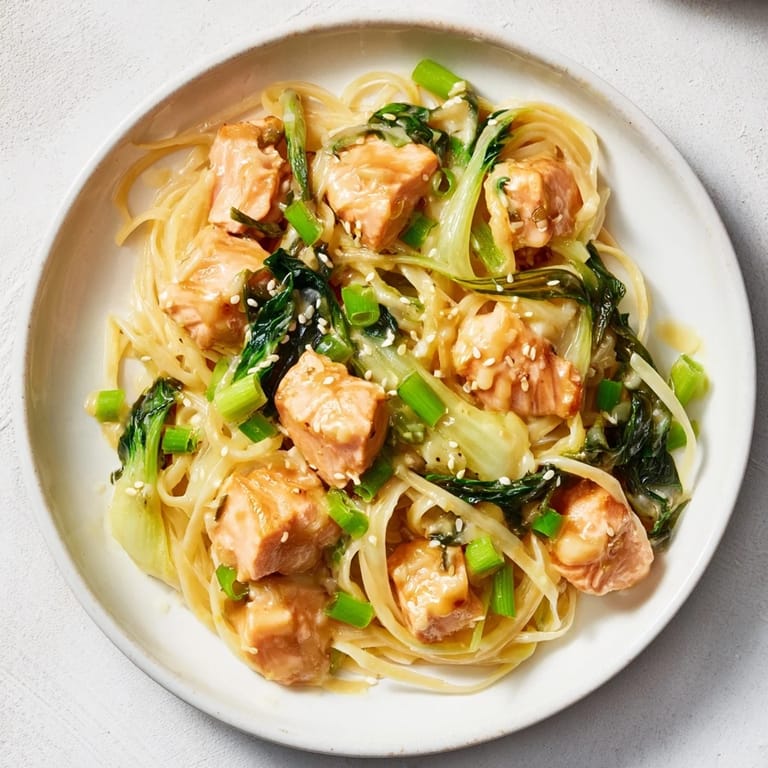
 This dish transforms simple ingredients into something that feels like a special occasion. The way the miso butter sauce clings to each strand of pasta makes every bite feel intentional and considered.
Common Questions
- → What type of pasta works best?
Long pasta like linguine or spaghetti complements the sauce and salmon well by holding the creamy miso butter coating smoothly.
- → Can I substitute bok choy with another vegetable?
Yes, spinach or baby kale can be used instead if bok choy isn’t available, adding similar freshness and texture.
- → How to prevent salmon from overcooking?
Cook salmon pieces gently over medium heat just until opaque and flaky, about 2–3 minutes per side, to keep them tender.
- → What gives the sauce its umami flavor?
White miso paste combined with soy sauce and mirin blends to create a rich, savory umami depth balanced by butter and cream.
- → Any tips for achieving a silky sauce texture?
Reserve some pasta cooking water and add it gradually when tossing the pasta with sauce to loosen and smooth the coating.
- → Can I make this dish gluten-free?
Absolutely, using gluten-free pasta and tamari instead of soy sauce maintains the flavors for gluten-sensitive diets.