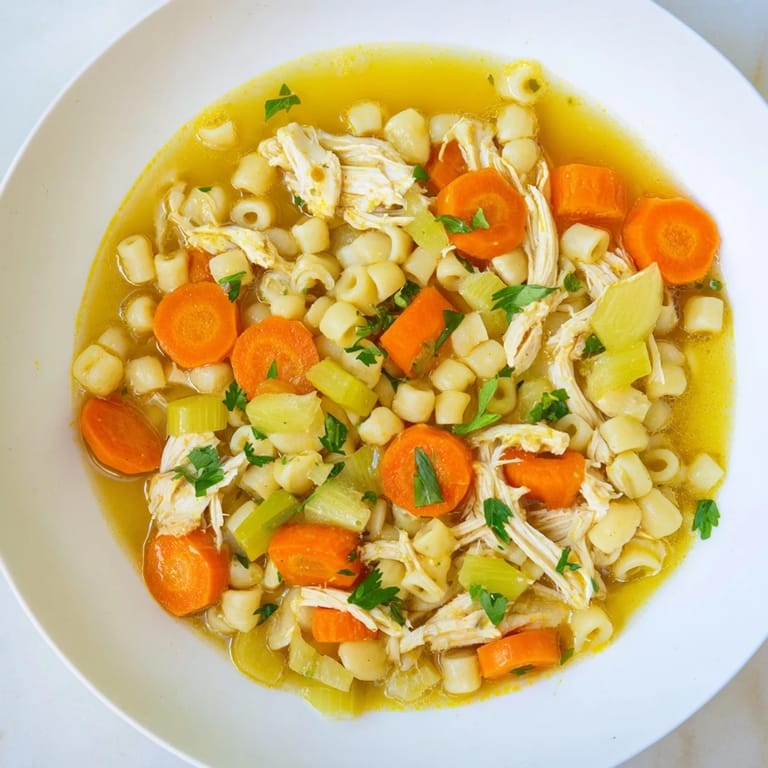
 Pin it
 There's something about the smell of ginger and turmeric simmering in broth that makes everything feel manageable, even on those mornings when you wake up feeling like you've been hit by something invisible. I developed this soup during a particularly rough January when I seemed to catch every cold that floated through the office, and instead of reaching for the usual remedies, I started playing around with what felt warm and healing. The turmeric and fresh ginger weren't choices I made because I read they were good for immunity—they were instinctive, like my kitchen was trying to tell me what I needed before I even thought to ask.
I remember my friend Marcus showing up at my apartment unannounced one evening, looking completely exhausted, and the first thing he asked wasn't how I was—it was whether I had anything he could actually eat. I ladled this soup into a mug, and watching him sit on my kitchen counter, gradually straightening up as he sipped it, felt like I'd accidentally discovered something important. He came back three days in a row after that, and we never talked about the soup itself, but we both knew why he was really coming.
Ingredients
- Boneless, skinless chicken breasts (2, about 400 g): These cook quickly and shred easily, which means less time fussing and more time letting the flavors develop in the pot.
- Olive oil (1 tablespoon): Just enough to get a light golden sear on the chicken that builds flavor without making the broth greasy.
- Medium onion (1, diced): The foundation that makes everything taste less like medicine and more like actual food.
- Large carrots (2, peeled and sliced): They soften into the broth and add a gentle sweetness that balances the spices.
- Celery stalks (2, sliced): A quiet ingredient that adds depth most people can't quite identify but definitely notice is missing if you skip it.
- Garlic cloves (4, minced): Enough to be present and warm, but not so much that it overpowers the turmeric and ginger.
- Fresh ginger (1 tablespoon, grated): If you can find it, fresh ginger makes a real difference—ground ginger will work in a pinch but tastes like a substitute.
- Fresh turmeric (1 teaspoon, grated) or ground turmeric (1/2 teaspoon): The star ingredient that makes this feel intentional and gives the broth a warm, earthy color.
- Low-sodium chicken broth (8 cups): The base that lets everything else sing without drowning them out.
- Ditalini pasta (3/4 cup): Small tubes that catch the broth and make this feel like a real meal instead of just a bowl of liquid.
- Bay leaf (1): Add it and forget it—it works so quietly you'll forget it's there until you remember to fish it out at the end.
- Salt and black pepper: Start conservative and taste as you go, because the flavors concentrate as things simmer.
- Fresh parsley (2 tablespoons, chopped): A brightness at the end that makes you suddenly remember this is also a bit cheerful.
- Lemon juice (from 1/2 lemon): The thing that wakes everything up and makes you realize why this soup actually works.
Tired of Takeout? 🥡
Get 10 meals you can make faster than delivery arrives. Seriously.
One email. No spam. Unsubscribe anytime.
Instructions
- Sear the chicken:
- Heat the olive oil in your pot over medium heat until it shimmers slightly. Place the chicken breasts in and let them sit for a full 2 to 3 minutes before flipping—you want that light golden crust that means the flavor is sticking around for the broth. They don't need to be cooked through; you're just creating a foundation.
- Build the base:
- Remove the chicken and into the same pot go your onion, carrots, and celery. The bits stuck to the bottom of the pot are exactly what you want, so don't clean it. Let these vegetables soften for about 5 minutes, stirring occasionally, until the onion starts turning translucent.
- Wake up the spices:
- Add your minced garlic, grated ginger, and turmeric, then stir constantly for just about a minute. You'll know it's working when the kitchen suddenly smells alive and sharp in the best way.
- Bring it together:
- Return the chicken to the pot, pour in the broth, drop in your bay leaf, and bring everything to a gentle boil. Once you see the rolling bubbles, reduce the heat and cover the pot. Let it simmer quietly for 20 minutes while the chicken finishes cooking and the flavors start finding each other.
- Shred and continue:
- Remove the chicken to a cutting board and use two forks to shred it into bite-sized pieces. Return it to the broth, which should now taste noticeably warmer and more complex than when you started.
- Add the pasta:
- Stir in your ditalini pasta along with salt and pepper, then cook uncovered for 8 to 10 minutes. The pasta will soften as it absorbs the broth, and that's exactly what you want—each small tube becomes like a tiny flavor vessel.
- Finish it:
- Stir in the fresh parsley and squeeze of lemon juice, then taste and adjust the salt or pepper if it needs it. Fish out that bay leaf, and you're done.
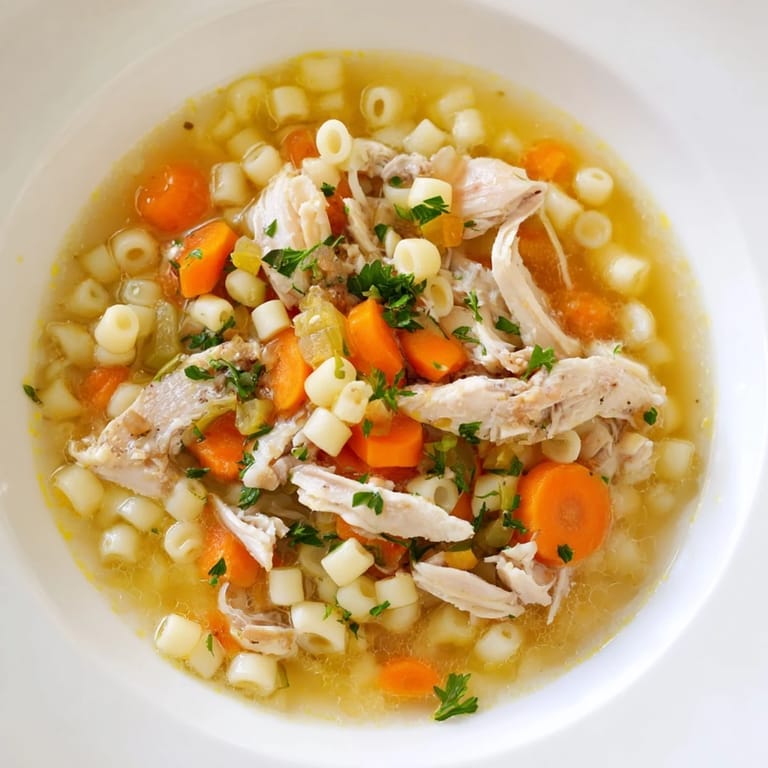 Pin it
 My mother called me one afternoon while I was stirring a pot of this soup and just by hearing the clink of the spoon against the pot, she asked if I was making my 'healing thing.' That moment stuck with me—the idea that a recipe could become a language between people, something you both understood without explanation. Now whenever someone I care about is struggling, I find myself making this without being asked, and somehow they know exactly what I'm saying.
When to Make This
This soup isn't just for when you're sick, though it's certainly there for that. I make it when I need something grounding on a gray afternoon, or when someone in my life feels overwhelmed and needs food that says I'm thinking about you without being dramatic about it. It also works as a gentle first course if you want something warm and nourishing before a larger meal, and it's the kind of dish that makes your kitchen smell like you actually know what you're doing. The turmeric gives it a quiet sophistication that belies how straightforward it is to make.
Storage and Reheating
This soup keeps beautifully in the refrigerator for up to four days, and honestly it tastes even better the next day when the flavors have had time to settle and get to know each other. If you're freezing it, do it before adding the pasta so you don't end up with mushy noodles when you thaw it—just cook the pasta fresh when you reheat. Reheating is straightforward; a gentle simmer on the stovetop brings it back to life far better than the microwave, which somehow makes it taste either too hot or too cold with no middle ground.
Variations and Flexibility
This recipe is forgiving enough to bend around what you have. If ditalini pasta isn't in your cabinet, orzo or small shells work perfectly well, and I've even used broken vermicelli in a pinch. For extra depth, some chopped spinach stirred in at the very end adds color and nutrition without changing the essential character of the soup. If you want to push the immune-support angle, a pinch of cayenne adds warmth and a subtle kick, or try a small handful of fresh herbs like dill or tarragon instead of just parsley for something completely different.
- For a heartier version, add a cup of diced sweet potato or regular potato along with the other vegetables.
- White pepper instead of black gives it a slightly different flavor profile that some people prefer.
- A small splash of white wine added with the broth adds complexity without being noticeable as wine.
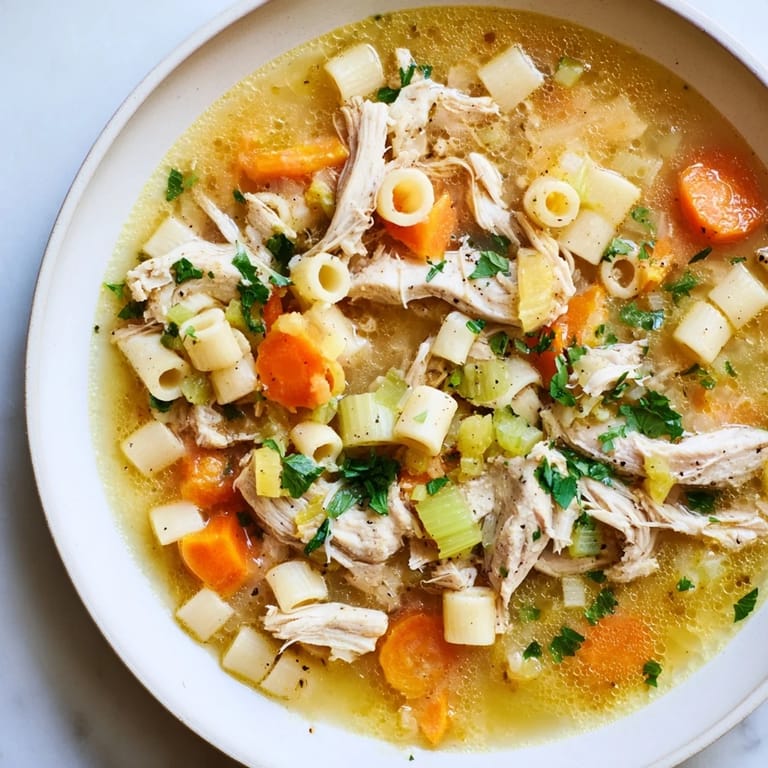 Pin it
 There's something deeply satisfying about a recipe that asks nothing fancy of you but delivers something that feels like care. This soup has become my quiet answer to a lot of questions people never ask out loud.
Common Questions
- → Can I substitute ditalini with other pasta?
Yes, small pastas like orzo or small shells work well and cook similarly, maintaining the soup's texture.
- → How do ginger and turmeric benefit the soup?
Fresh ginger and turmeric add warmth and subtle spice while contributing antioxidant and anti-inflammatory properties.
- → Is it possible to prepare this soup dairy-free?
Yes, all ingredients are naturally dairy-free, making it suitable for dairy-free diets.
- → What is the best way to shred the chicken?
Use two forks to pull apart the cooked chicken breasts into bite-sized shreds for easy blending into the soup.
- → Can I add extra vegetables for more nutrition?
Absolutely, adding spinach or other leafy greens near the end enhances flavor and boosts nutritional value.